Pantaloon hernia
Key Images
Look For First
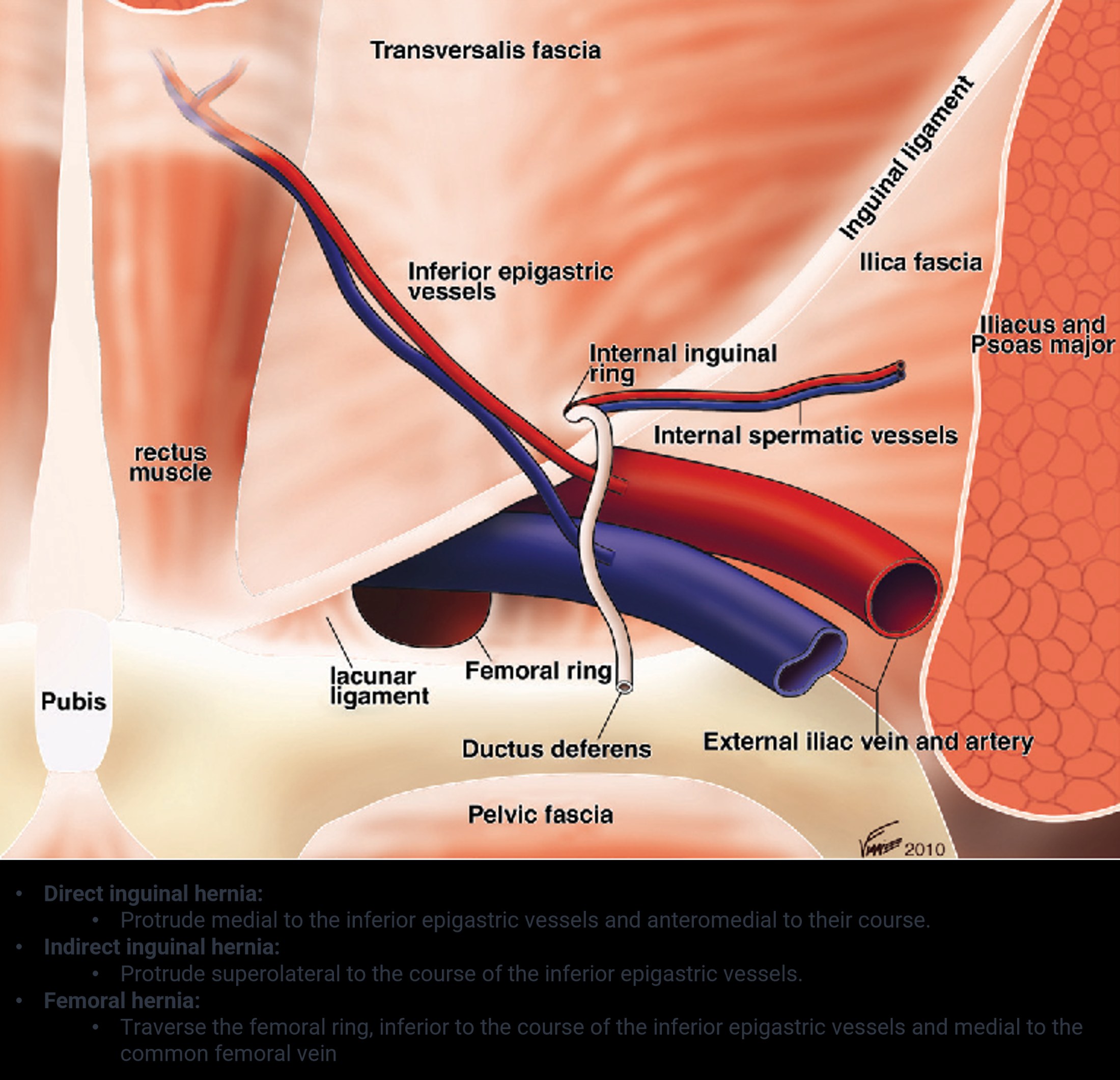
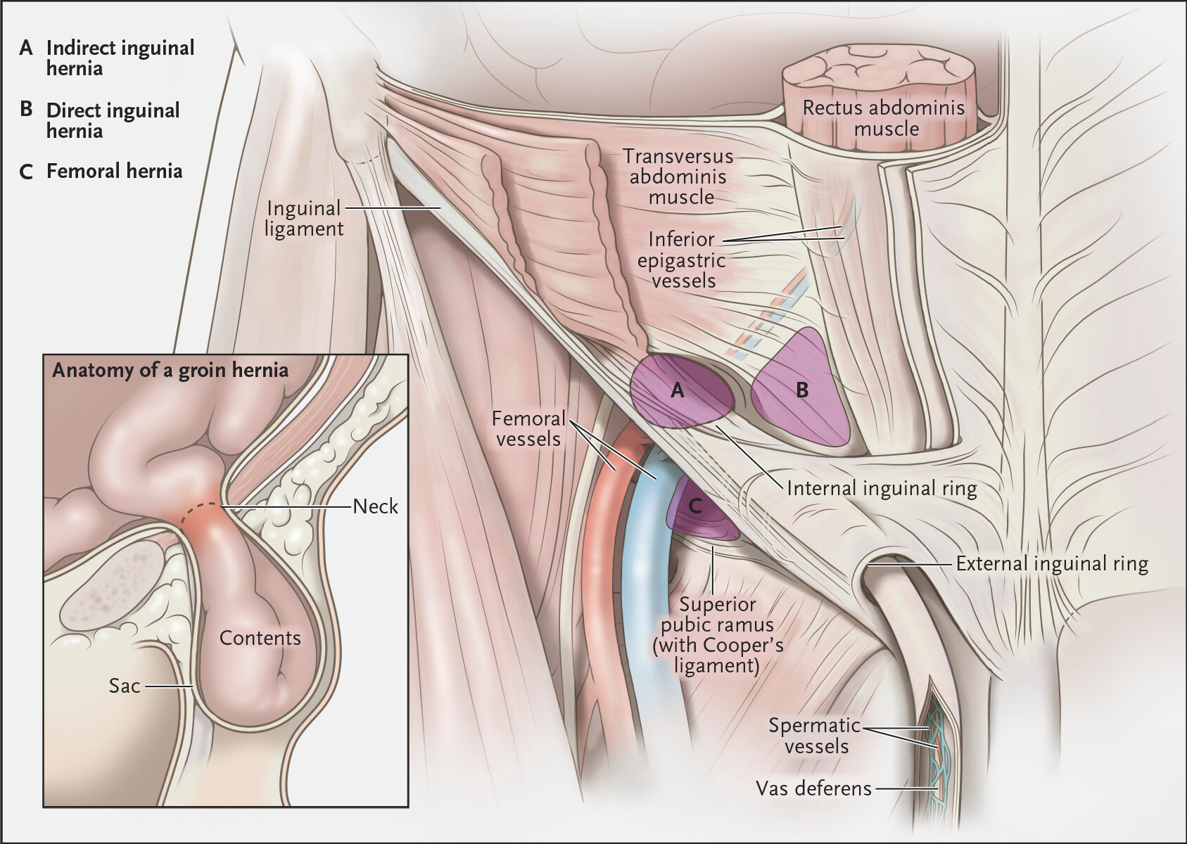
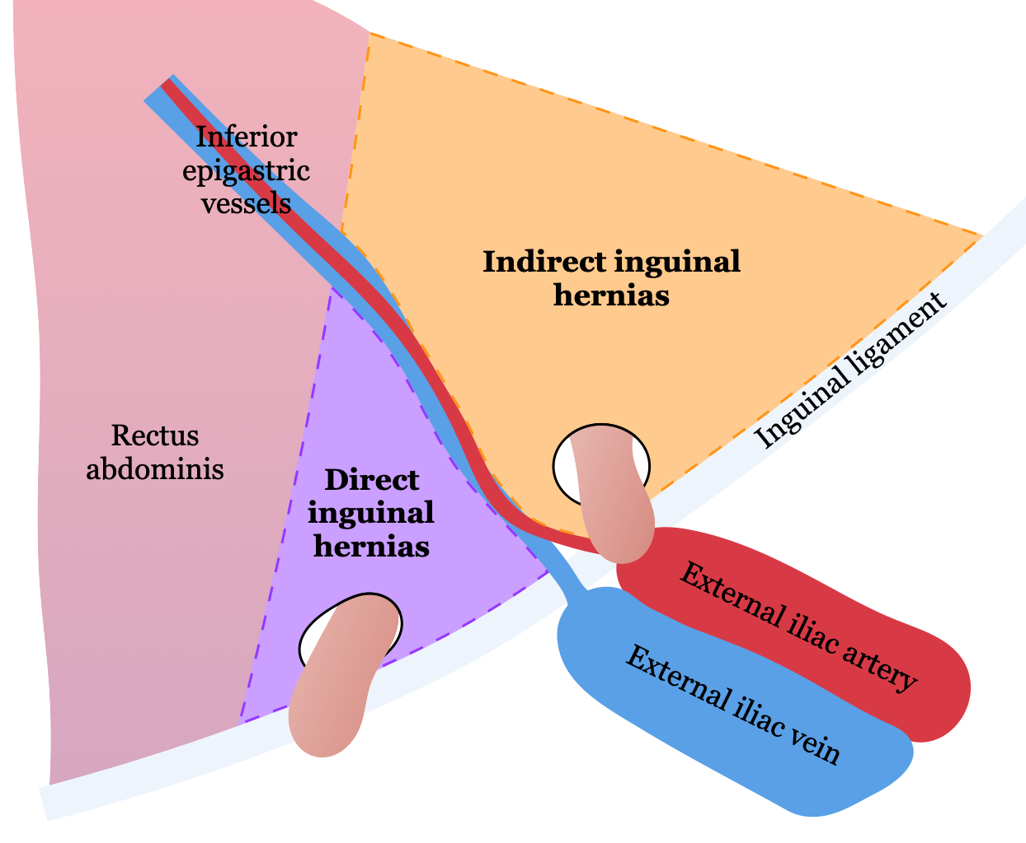
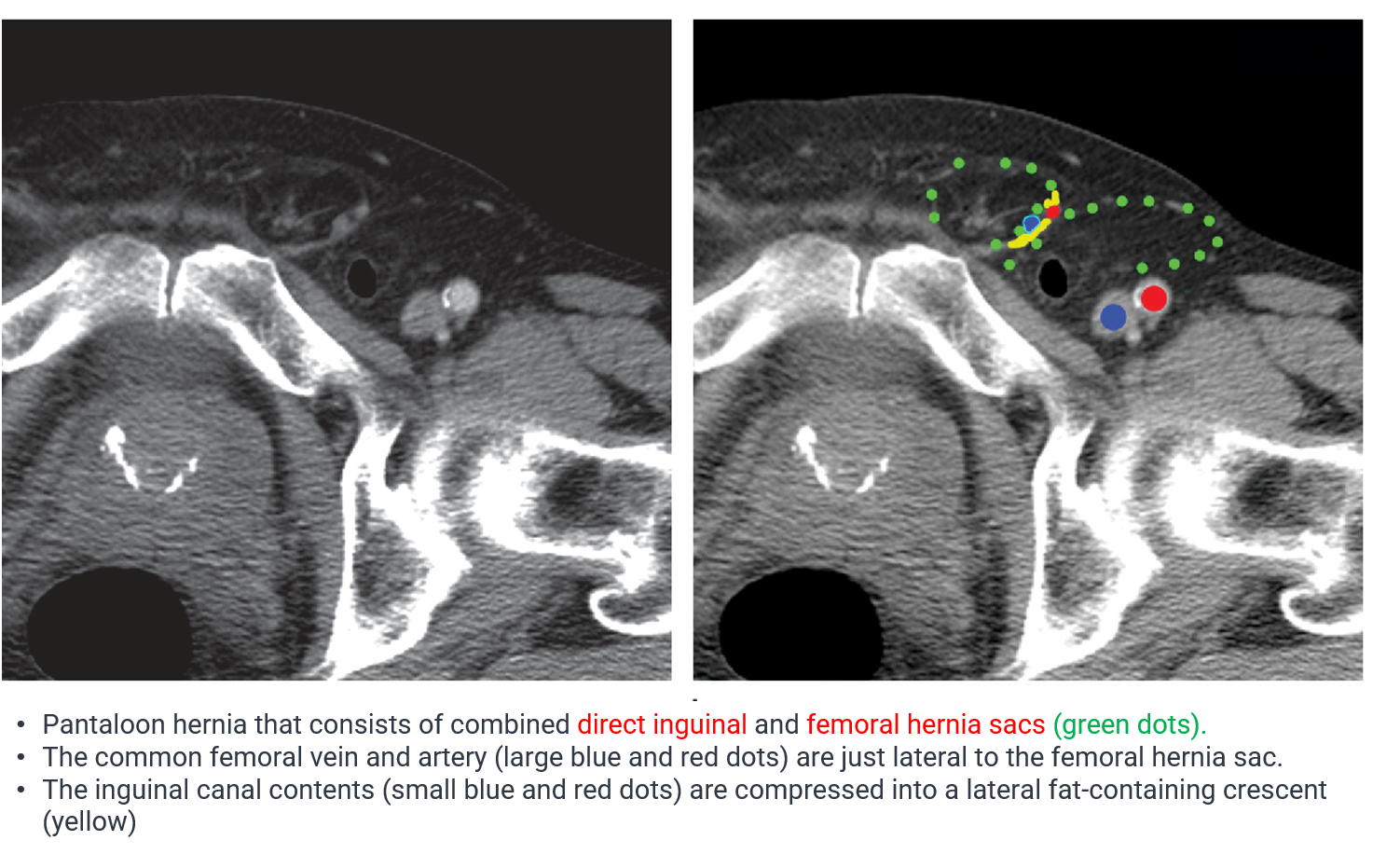
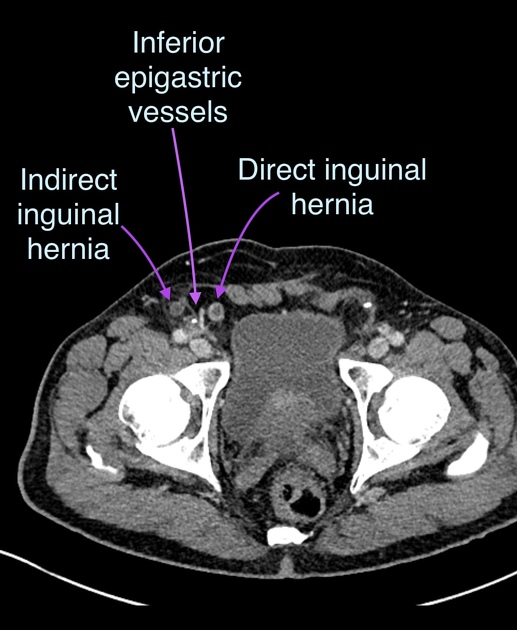
- Two separate hernia sacs on the same side straddling the inferior epigastric vessels
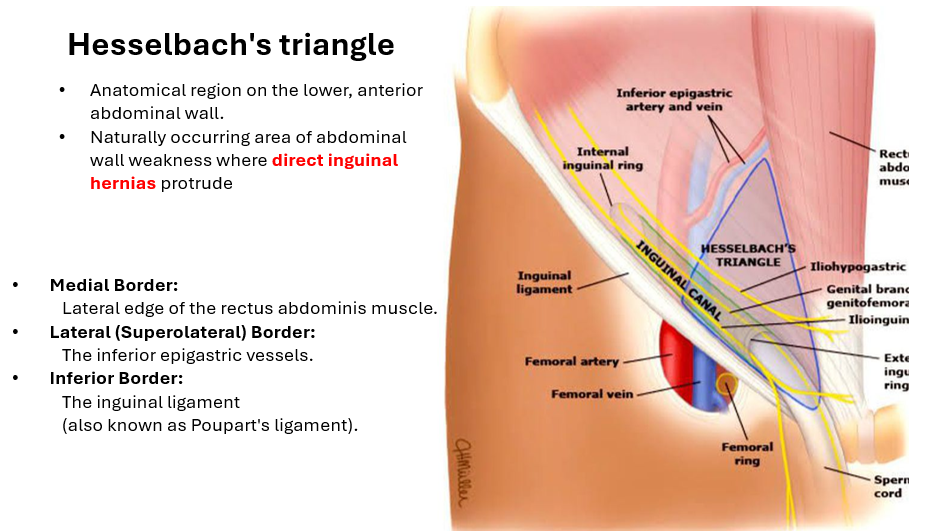
- Medial (direct) component protruding through Hesselbach's triangle
- Lateral (indirect) component protruding through the internal inguinal ring
Key Image Findings
- On ultrasound or CT, identify two distinct hernia sacs separated by the inferior epigastric vessels as the dividing anatomical landmark on the same side.
- The indirect (lateral) hernia sac exits through the internal inguinal ring and lies lateral to the inferior epigastric vessels.
- The direct (medial) hernia sac protrudes through Hesselbach's triangle, the area bounded by the inferior epigastric vessels laterally, the medial umbilical ligament medially, and the arcuate line inferiorly.
- The posterior inguinal wall shows disruption with reabsorption of the inferior epigastric vessels, reflecting progressive degenerative changes particularly in elderly patients.
- Both components can contain bowel, omentum, or other abdominal contents depending on the size and content of each sac.
- The two sacs together create the characteristic 'pantaloon' or 'saddlebag' appearance, resembling the two legs of trousers straddling the vessels.
Differential Diagnosis
- Pure indirect inguinal hernia — lacks the medial direct component; inferior epigastric vessels are lateral to the entire hernia sac
- Pure direct inguinal hernia — lacks the lateral indirect component; defect is entirely medial to the inferior epigastric vessels
- Femoral hernia — protrudes below the inguinal ligament through the femoral canal rather than through the inguinal canal
- Spigelian hernia — occurs lateral to the rectus abdominis and medial to the semilunar line, not at the inguinal region
Discussion
Pantaloon hernias are the result of progressive degenerative damage to the inguinal floor over time, explaining their high prevalence in elderly patients with chronic fascial weakness.
A small indirect sac can be easily missed during clinical examination or intraoperative inspection when an obvious direct component is present, leading to incomplete hernia recognition.
Failure to identify and repair the indirect component is a recognized cause of recurrent inguinal hernia after direct repair alone, emphasizing the importance of preoperative imaging.
The inferior epigastric vessels serve as the critical anatomical landmark distinguishing the two hernia components and should be clearly identified on imaging.
Modern mesh-based repairs (Lichtenstein, TAPP, TEP) automatically cover the entire myopectineal orifice, making them ideal for pantaloon hernias as they address both defects simultaneously without additional dissection.
The Hoguet maneuver — incising the transversalis fascia between the two sacs to unite them — represents an alternative operative technique for tailored repair of pantaloon hernias.
Reporting Pearls
Report pantaloon hernias by clearly identifying and describing both components: specify the size and location of the medial (direct) component through Hesselbach's triangle and the lateral (indirect) component through the internal inguinal ring, emphasizing that the inferior epigastric vessels separate the two sacs, and note the contents and potential for recurrence if either component is overlooked at surgery.
Pitfalls
- Overlooking the indirect component when a large direct hernia dominates the imaging appearance, leading to incomplete surgical planning and increased recurrence risk.
- Confusing pantaloon hernias with pure direct or pure indirect hernias by failing to identify both components and their relationship to the inferior epigastric vessels.
- Misidentifying the inferior epigastric vessels or their location, preventing proper classification of which component is direct versus indirect.
- Attributing hernia recurrence to surgical failure rather than recognizing that an undetected indirect component was not repaired in the initial operation.